
In four days, a robot arm on our desk learned to see, pick and place
A bought arm, our own skills
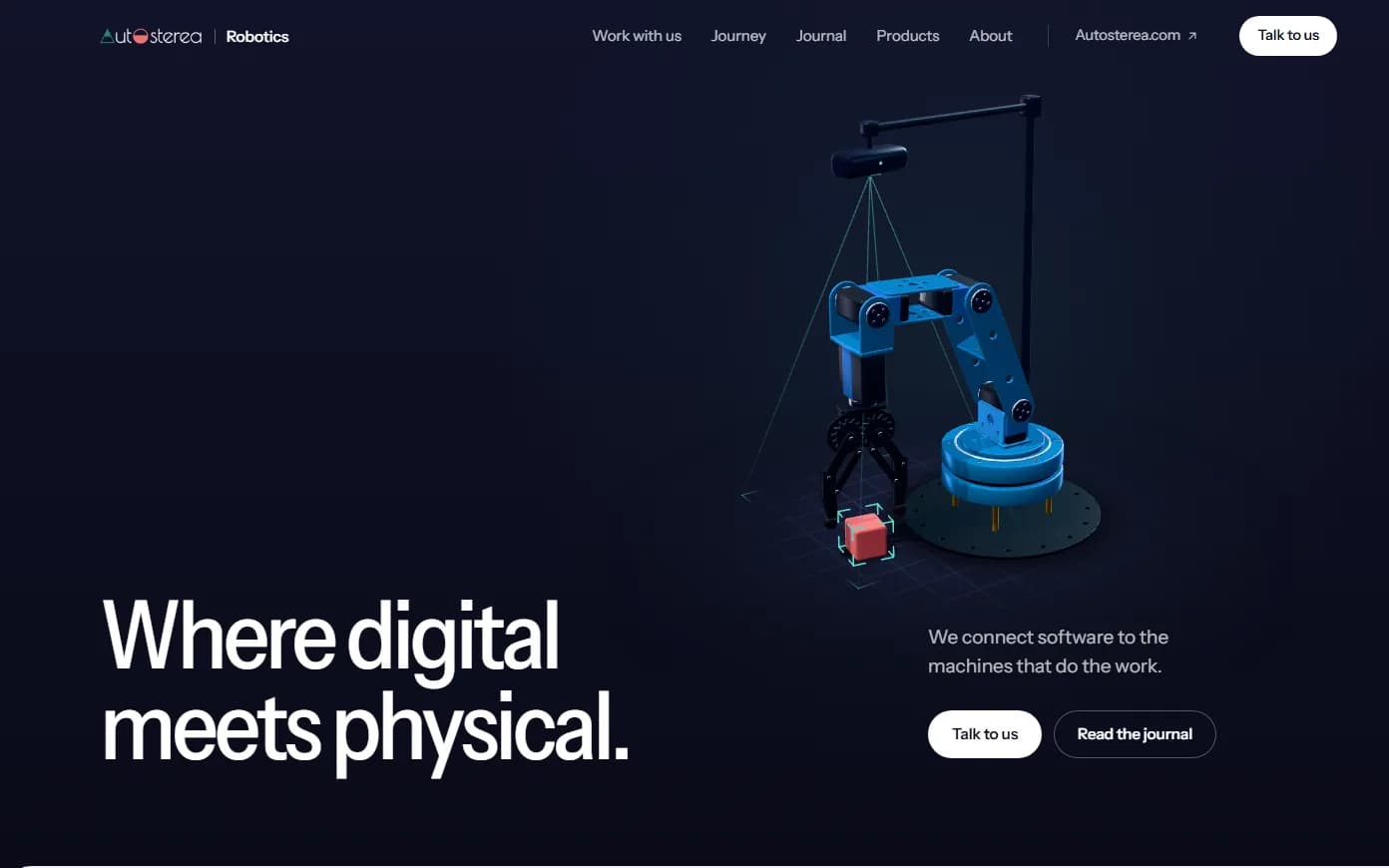
Autosterea Robotics is our research and development work on machines that do physical work. The first project sits on a desk: a camera watches a tabletop and guides a robot arm to pick up objects and move them.
The arm is a kit, a Hiwonder LeArm AI with six joints. We did not build it. We build everything that tells it what to do: the driver, the math, the camera work and the tools to teach it.
October 24: first moves
The arm arrived on October 24. The same day we wrote our own Python driver for it. It reads all six joints and can move any of them. A 4K camera joined the setup and ran at a steady 30 frames a second at 1080p, with no dropped frames.
October 25: the first pick
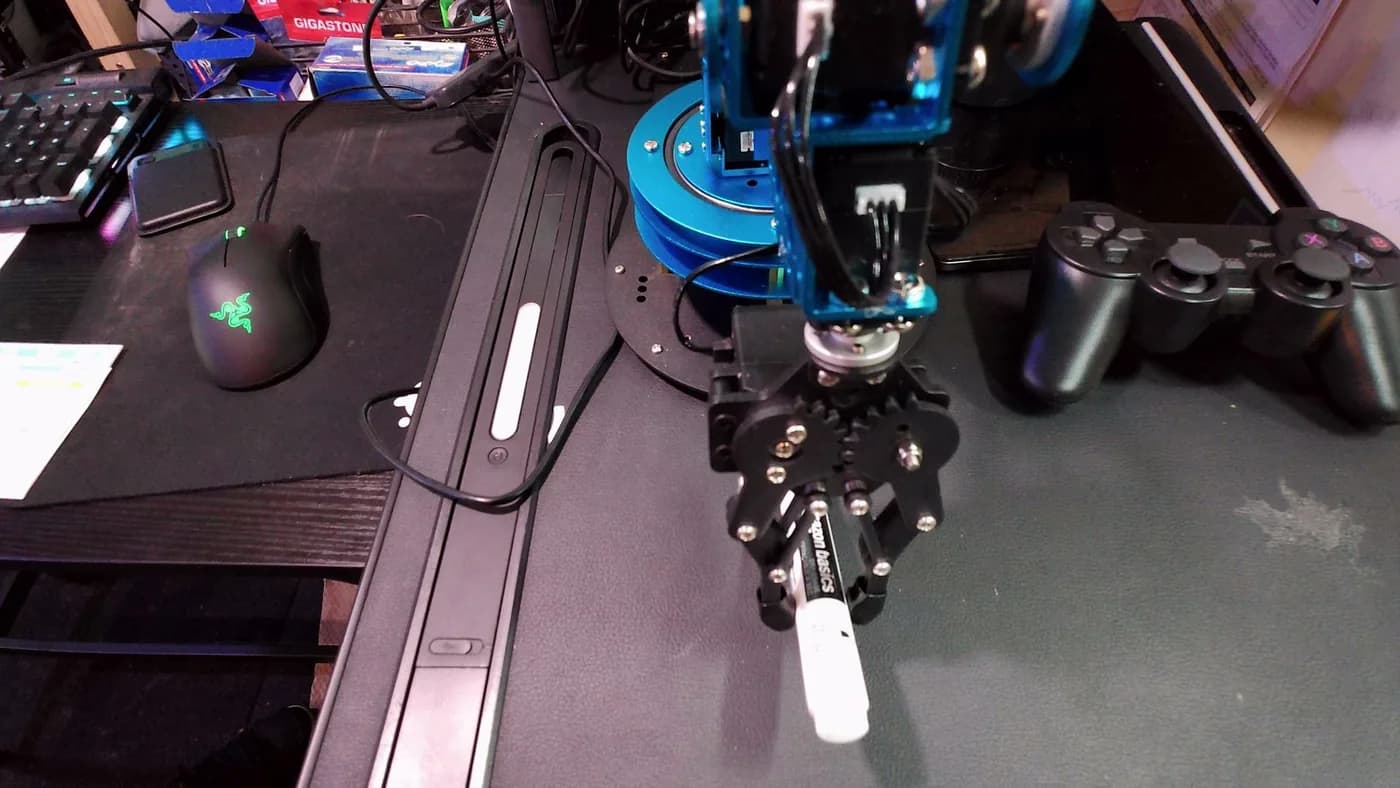
The next day the arm picked up an object for the first time: a whiteboard marker lying flat about 16 cm in front of its base. To get there we wrote our own forward and inverse kinematics in Python. That is the math that turns “put the gripper here” into an angle for each joint.
Then we turned the pick into a 23-second routine. The arm grips the pen, lifts it, spins it about 85 degrees each way, draws a 3 cm circle in the air, puts the pen back and returns to rest. It checks its grip before lifting and stops if a joint is blocked. It ran three times without a miss.
October 26: the camera learns the desk
A camera is only useful if it knows where things are. On October 26 it learned to find red, blue and black markers by colour and shape, and which way each one points.
To tie the camera's picture to the desk, the arm put a marker down at 5 known spots and the camera watched where it landed. The arm placed the marker and picked it back up at all 5 spots without a miss. The same day we built a command center to drive the arm by hand, which gets its own post.
October 27: a tic-tac-toe board
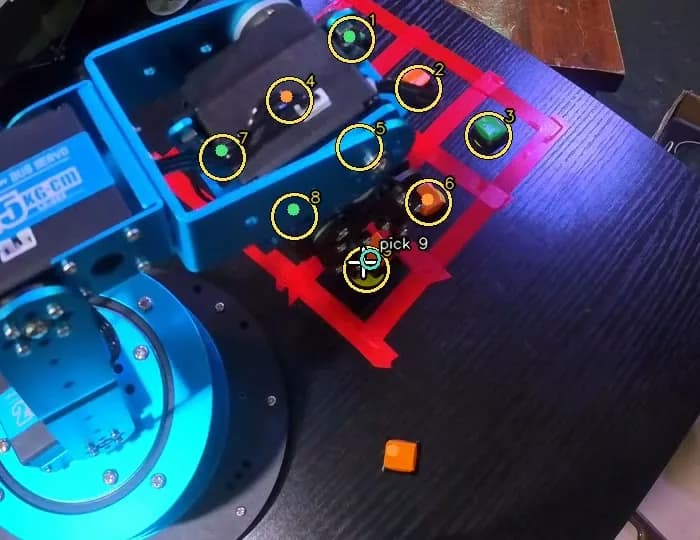
Next came a 3 x 3 board of red tape with a yellow dot in each cell, and small green and orange cubes. The camera finds all nine dots, even when the lamp washes one out or cubes hide two, and reads which cube sits on which cell.
Ravi then taught the camera where the arm is. He put the open fingertips on each of the nine dots and pressed Save. Nine exact pairs of “where the camera sees it” and “where the arm is” made a map good to about 2.6 mm.
From there the arm cleared the row nearest to it on its own: 6 of 6 cubes picked off the board and set beside it, over two runs.
From hands to humanoids
The roadmap on the robotics site runs from hands to humanoids: hands, then hands with vision (where we are now), then bigger hands, then four legs, then two. Each step uses what we learned in the step before.
Today we offer robotics consulting and development to manufacturers. If you make things and want a camera-guided arm on your bench, the site has a Talk to us page.
Every lab day ends with a public journal entry, with real photos and videos. Read it at robotics.autosterea.com/journal, and see the whole site at robotics.autosterea.com.